
Top 10 CS2 Crosshair Placement Habits That Save Rounds

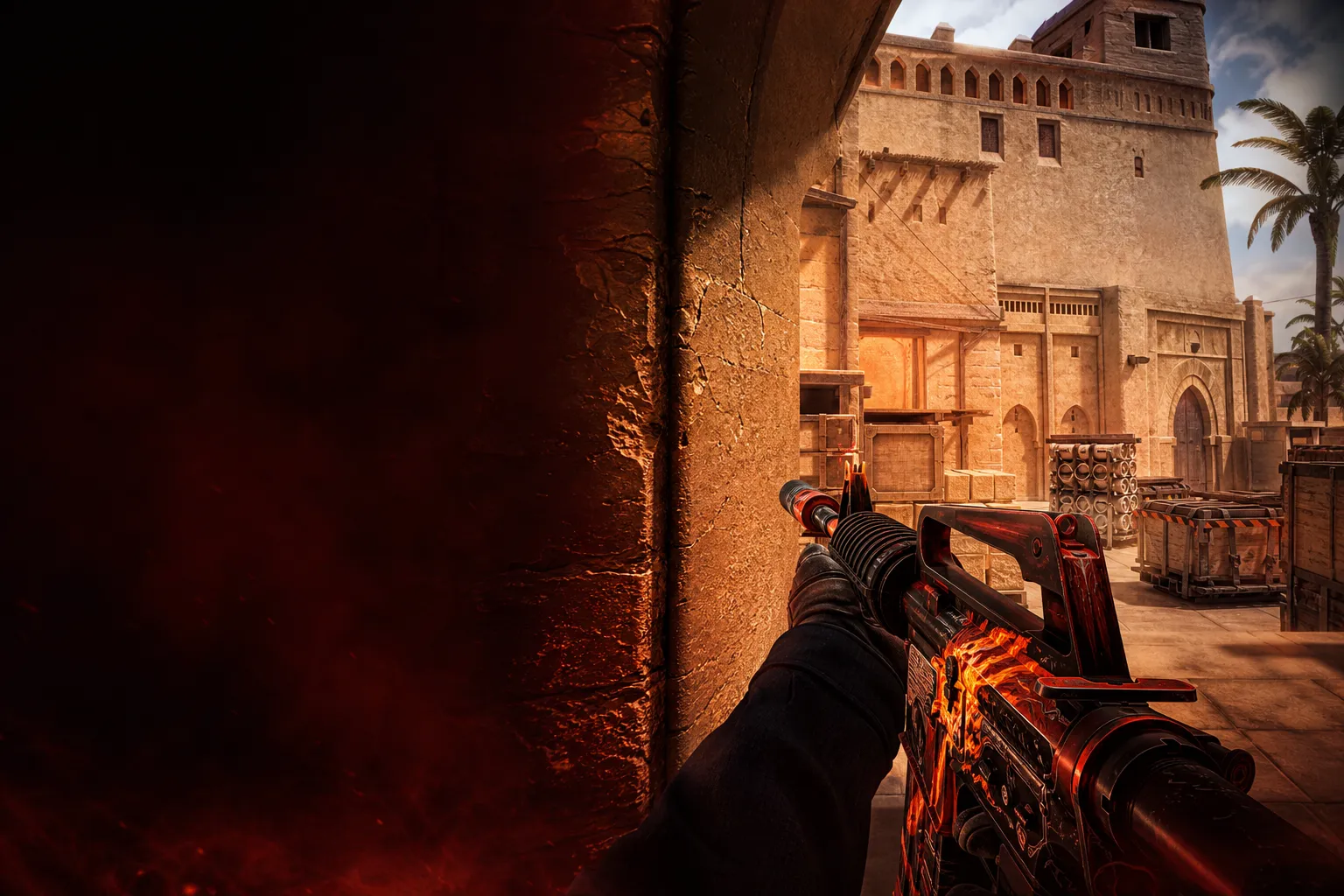
I’ve lost more rounds to bad crosshair placement than to cracked aim, missed utility, or some kid wide-swinging with an AK-47 and zero fear. That’s the brutal CS2 truth. You can have 400 FPS, clean subtick spray transfers, and a Premier rating that makes your friends squint, but if your crosshair is parked at knee level, you’re basically donating free kills.
Crosshair placement isn’t flashy. It doesn’t clip well. Nobody screams on stage at a Major because someone held head height properly on Mirage A ramp. But it’s the quiet difference between winning a 3v3 on Nuke and watching the bomb go down while you’re still dragging your mouse up from the floor.
1. Stop aiming at the last guy’s corpse
This one sounds obvious until you watch a teammate clear Inferno banana with his crosshair glued to the ground because he just killed someone at sandbags. People do this constantly. They win one duel, then their brain freezes on that exact angle like the next enemy has to spawn there too.
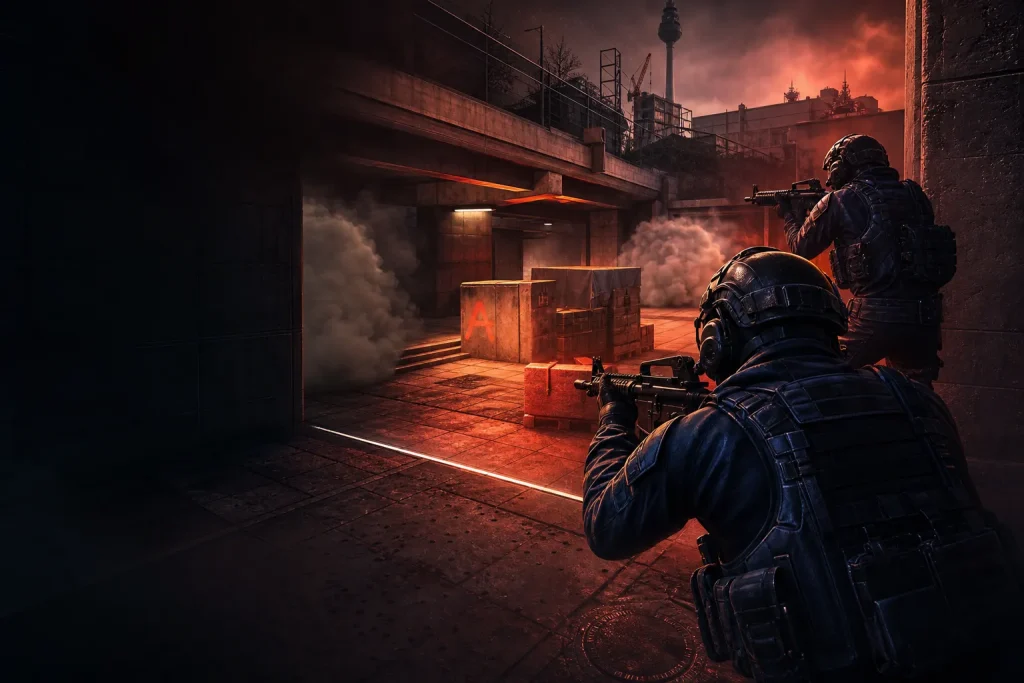
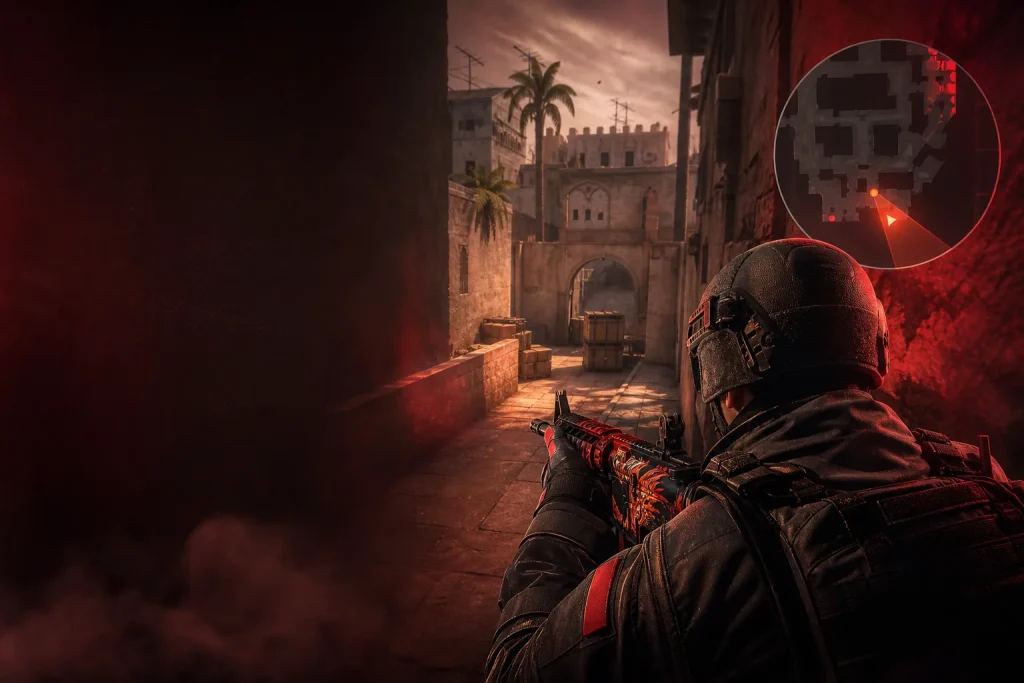
Good placement resets to the next likely fight, not the last one. If you clear Mirage connector, don’t keep your crosshair on connector after the duel is done. Snap it to jungle, stairs, or ticket depending on the read. The whole point is to be already aimed at the next head before the swing happens.
2. Keep your crosshair where heads actually exist
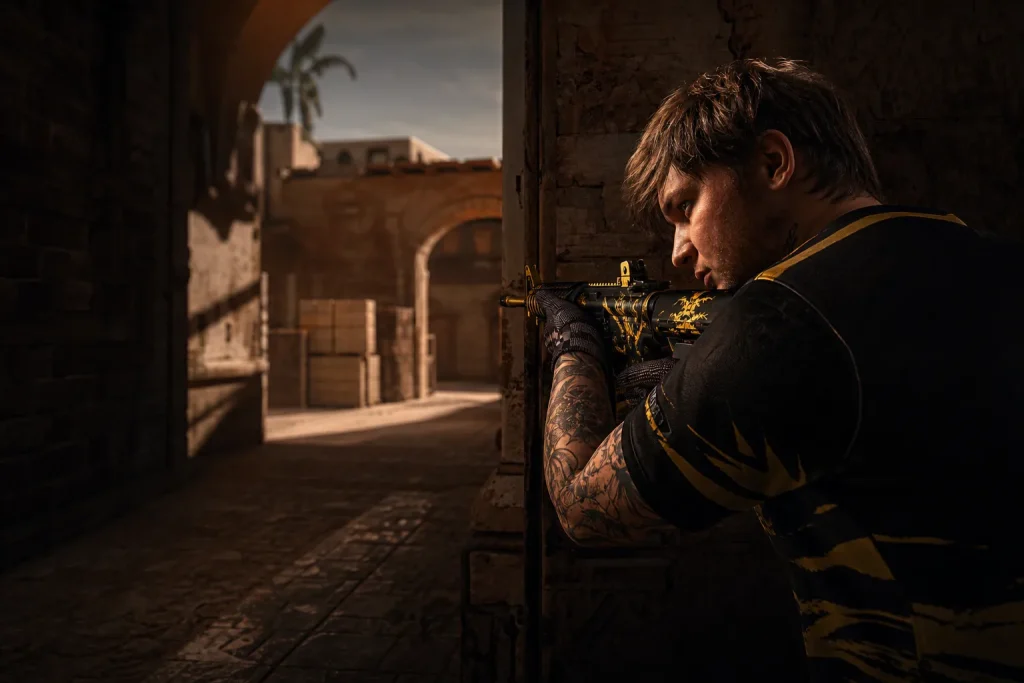
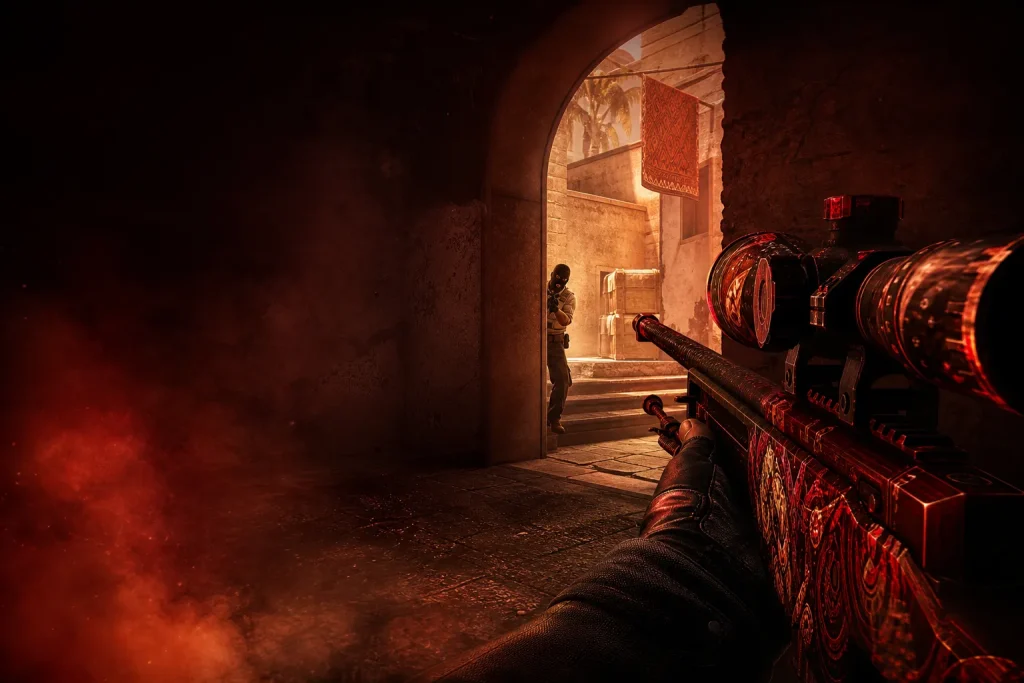
Head height isn’t some mystical pro-only concept. It’s just geometry. On most standard fights, your crosshair should live where a standing enemy head will appear if they swing wide. That means you’re aiming a little differently on every map, because CS2 maps are messy in the best way.
On Dust2 long, hold just above the railing line if you’re peeking blue. On Ancient A main, don’t stare at the dirt—your crosshair should be ready for a head popping from the right side of hut or lane. On Overpass, monster fights are all about keeping the line where a crouch peek or wide swing still meets your scope or rifle cleanly. If you’re always adjusting on reaction, you’re already late.
Quick habit check
- Pre-aim common head level, not center screen.
- Adjust for elevation changes on stairs, ramps, and boxes.
- Don’t track feet unless you know the player is crouching.
- Reset after every kill.
3. Pre-aim the boring angles first
Every map has those gross little corners that win rounds because people get lazy. Think Nuke hut, Mirage bench, Train-style off-angles whenever that map rotates back in, or some degenerate tucked in Cave on Ancient. The best players don’t “check everything”; they know the first two angles that matter and they hit them with muscle memory.
This is where players like donk look illegal. He isn’t magically clairvoyant. He just arrives on angles with a crosshair already sitting on the most likely head position, so his first bullet lands before the opponent’s brain even catches up. s1mple used to do this for years on AWP lines, and m0NESY does it now with ridiculous speed. That’s not random talent. That’s reps.
If you’re clearing a site and your crosshair is doing giant sweeping arcs, you’re basically telling the enemy where you’re looking. Tighten it up. One angle, one beat, next angle.
4. Clear with intention, not with panic
There’s a huge difference between “clearing” and “flicking around like your mouse is on fire.” Panic movement ruins crosshair placement because your hand starts chasing uncertainty instead of controlling space. If you know the common spot, park your crosshair there before you expose yourself. If you don’t know the spot, learn it. CS2 punishes guesswork hard, especially now that Source 2 makes movement and visual timing feel so crisp.
Subtick didn’t make bad clearing disappear. It just made bad habits feel even worse when they get punished instantly. That tiny delay between your brain and your mouse? That’s the round right there. Calm wins fights.
Try thinking in this order:
angle one — angle two — trade line — fallback.
That’s it. You don’t need a five-step ritual and a prayer. Just stop overflicking corners you already know exist.
5. Match your placement to the economy
Crosshair placement changes when the money changes. Not always wildly, but enough that good players notice it and bad players don’t. If the CTs are on a rough eco after losing two rifles and a kit, they’re more likely to close distance or hide in stupid close angles. That means your crosshair should be lower and tighter for the contact distance, not floating at long-range head height like you’re fighting a full buy in a Major grand final.
Same thing on your own side. When your team has $3,400-ish and is trying to force with upgraded pistols and one Galil, you’re probably taking faster contact fights. Your placement needs to reflect that. In a full rifle round, you hold more disciplined head level. On a force buy, you’re expecting weird spacing, fast pushes, and a lot of close-range chaos. CS2 economy reads matter because they change where the fight happens.
6. Use utility to fix the angle before you peek it
Crosshair placement and utility aren’t separate skills. They’re married. A flash through Mirage pop? Your crosshair should already be set for the default anchor swing. Smoke off CT on Inferno? Then your placement shifts to the next visible head, not the smoke itself like some lost silver player staring into the void.
When your utility forces a duel, pre-place the crosshair for the exact follow-up. Molly out quad on Vertigo A? Great, now you know the defender is either swinging from safer ground or forced deeper into the bombsite. Your crosshair shouldn’t be somewhere vague. It should be where the head appears after the damage ticks start doing their job.
This is where a lot of Premier players throw rounds. They use a nice flash, swing late, and still get caught with their crosshair in the middle of nowhere because they never translated the utility into a real angle.
7. Don’t overcorrect after every miss
Miss one shot and a lot of players instantly yank their crosshair off target like they’ve been electrocuted. That habit costs rounds. If your first placement was close, micro-adjust. Don’t rebuild the entire camera view from scratch because you missed by two pixels.
CS2’s subtick and smoother feel can trick people into making huge corrections that aren’t needed. Watch the best aimers in big events and you’ll notice how little they actually move when they’re dialed in. ZywOo doesn’t need circus-level mouse movement to win a duel. He keeps the base placement clean, then makes tiny corrections. That’s the whole trick. Clean first, tiny second.
8. Think in common peeks, not in hero moments
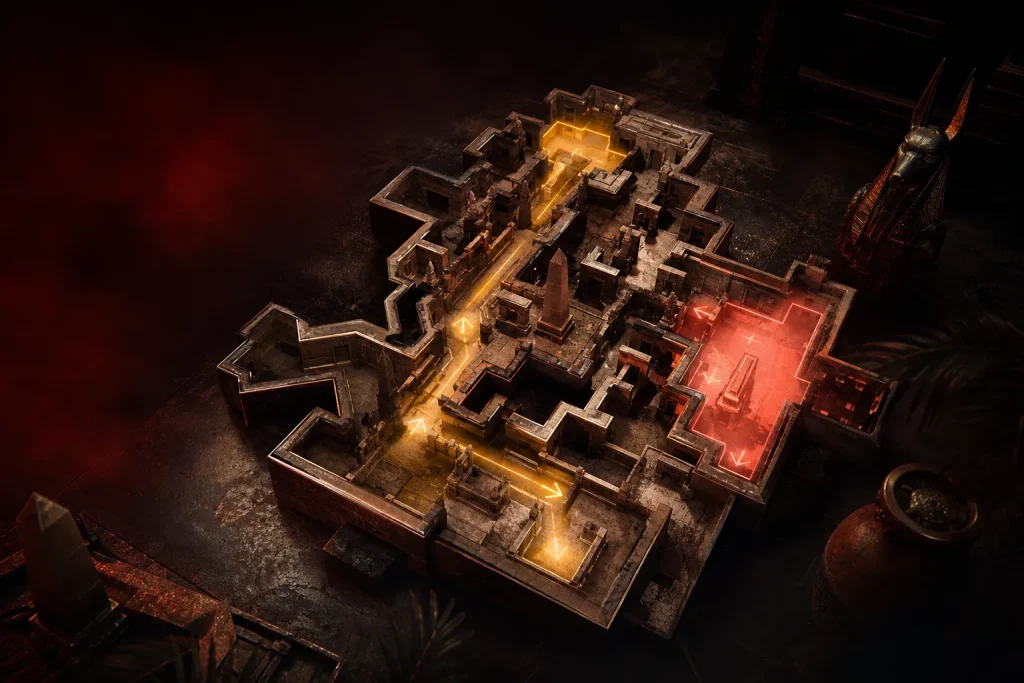
Every map has ego peeks, but most kills come from boring, repeatable paths. T side Mirage? You’re fighting connector, ticket, jungle, and stairs over and over. CT side Ancient? A main, donut, lane. Nuke? Hut, squeaky, ramp, mini. If you place your crosshair for the “highlight” angle only, you’re going to get wrecked by the regular one.
The smarter habit is to build a mental list of the most likely swing points and hold them with intent. Not every angle at once. Just the one that matters next. That’s why some players look like they’re cheating in demo review—they’re not reacting fast, they’re already there.
When you’re confused, fall back to this:
- common head angle
- next trade angle
- closest off-angle
- possible jiggle peek line
9. Practice placement like a mechanic, not a magician
If you want this skill to stick, stop treating aim training like a mood and start treating it like reps. Ten minutes on a workshop map or DM where you only care about pre-aiming head height will do more than 40 minutes of mindless bot shooting. I’m serious. If you’re grinding Premier and wondering why your aim feels inconsistent, this is probably why.
Do a few things on purpose:
clear Mirage palace with perfect head height, hold Inferno banana barrels without drifting, swing Anubis mid with your crosshair already at the first contact spot. Repeat it until your hand stops arguing with your brain. That’s how placement becomes automatic.
10. Accept that good placement wins ugly rounds
Not every round is a highlight reel. Sometimes you’re on a weak buy, one flash deep, 18 HP, and somehow still need to convert a 2v2. That’s where crosshair placement quietly carries you. It lets you win fights without needing the perfect spray, the perfect timing, or some heroic m4 4k like it’s a YouTube thumbnail from 2017.
It’s the difference between a round that feels “lucky” and a round that was actually controlled. The top teams at Majors don’t survive because every player is flicking like a machine gun. They survive because their crosshair is already on the next problem before the problem shows up.
If your placement is bad, you’re always reacting. If it’s good, you’re dictating the duel. And that’s why it saves rounds: not because it looks pretty, but because it stops you from giving away fights you should’ve owned five seconds earlier.
So next time you queue up Mirage, Inferno, or Nuke in Premier, ask yourself one thing before the round starts: is your crosshair where the kill will be, or where you hope it might be?