
How to Win CT Sides on Vertigo Without Overrotating

Vertigo CT side is where good teams stop losing rounds they had no business throwing away. You don’t need some miracle 1v4 from your AWPer every half. You need to stop the stupid rotations, keep A and B from collapsing at the same time, and make T sides work for every inch they take.
The funny thing about Vertigo is that it tricks people into panicking. One guy hears footsteps ramp, someone sees utility toward B, and suddenly three CTs are sprinting through mid like it’s a pug on Mirage. That’s exactly how you get farmed by a half-decent team with clean timing and one lurk still alive on the other side of the map.
Why Vertigo punishes panic rotations
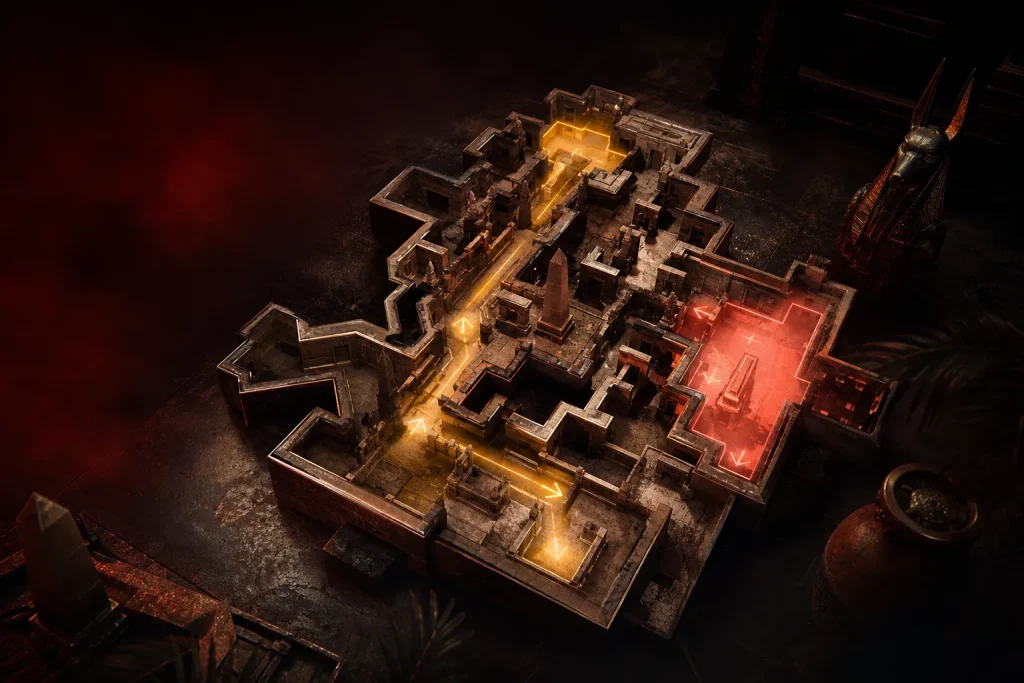
Vertigo isn’t just a vertical map. It’s a timing map. The distances from A ramp to B, or from B stairs back to A, are long enough that a wrong read usually becomes two wrong reads. If you rotate too early, the T side just walks into the empty site. If you rotate too late, you’re retaking through a smoke with 30 HP and a dream.
In CS2, Source 2 subtick makes those contact plays feel even sharper. That first bullet lands cleaner, the jiggle timing matters more, and you can’t rely on weird old-school peeker’s advantage excuses forever. On Vertigo, the team that stays calm usually gets the better fight. The team that overrotates gets split up and deleted in slices.
The core mistake: reacting to sound alone
A lot of CTs hear one step and instantly move. Bad habit. One footstep at ramp doesn’t mean five guys are there. One smoke at B doesn’t mean B is the final hit. On Vertigo, T teams fake more than people admit because they know CTs are desperate to leave A open the second utility gets lobbed down the stairs.
Hold your nerve and force them to prove the hit. That’s the whole thing.
Your default setup should be boring on purpose
The best Vertigo CT halves I’ve watched — and yeah, I’m thinking of teams at the Major level who actually respect map control instead of playing hero CS — are painfully boring early in the round. They don’t overstack. They don’t send four players hunting info. They keep a stable shell and make the Ts spend money first.
That matters because a decent T-side execute on Vertigo burns through cash fast. Two smokes, a molotov, flashes, maybe a HE or two, and suddenly they’ve spent around $1,000 to $1,500 before the hit even starts. If your CT side keeps its utility alive, you win the economy war without doing anything flashy.
- 2 A, 2 B, 1 roam is the safest starting point.
- A ramp player should live to stall, not die for info.
- B anchor needs to hold stairs and not drift into useless mid peeks.
- One mid/connector helper can rotate, but only after real contact.
- The fifth player is your insurance policy, not your first responder.
If you’re stacking A every round because “they always hit A,” you’re basically gambling with terrible odds. Good T sides read that instantly and just split the weak side with smokes and a lurk. You end up with nobody on B and two CTs trapped in a spam duel on the wrong bombsite.
Anchor your people, not your map positions
Most teams talk about positions like they’re sacred. A ramp. B stairs. Mid box. Fine. But Vertigo CT sides are really about who can survive pressure and who can delay without begging for a save call. The best anchors aren’t the loudest players; they’re the ones who know when to throw one molly and sit still.
If your B player hears steps, he doesn’t need to peek the world. He needs to buy 10 to 15 seconds. That’s it. One molly, a flash off the wall, maybe a deep smoke if you’ve got the cash, and suddenly your rotator has time to work. On the other side, A ramp defenders should use their utility to deny space, not win a highlight reel duel through the smoke.
This is where a lot of teams copy donk-style aggression badly. They see a star player taking map control on Nuke or Ancient and think every CT side needs constant peeks. Nope. Vertigo punishes that nonsense. One over-eager swing and the Ts get the exact opening they wanted.
When to rotate, and when to shut up and hold
The cleanest rule I’ve used: don’t rotate on the first piece of information unless that info comes with a real commitment. A smoke line, two flashes, bomb spotted, or obvious multi-player contact — those are rotation calls. One sound cue? Stay put.
Here’s the part people mess up: a “late” rotation that arrives with full utility is better than an “early” rotation that arrives empty-handed. CS2 rounds are so fast now that one alive CT with a kit and two smokes can turn a lost site into a retake. A naked rotator just becomes another corpse in the feed.
Think in layers:
- Layer 1: the anchor sees contact and delays.
- Layer 2: the nearby support player moves only if the hit looks real.
- Layer 3: the far rotator stays home until bomb commitment or a clear split.
That sounds basic because it is. The reason most teams still fail at it is ego. Somebody wants to be the guy who “read the round.” Half the time they’re just abandoning a site because they heard three bullets and got scared.
Use utility like a tax, not like a prayer
Vertigo CT utility should feel annoying to the T side, not spectacular. You’re not trying to end the round with a hero nade from Heaven. You’re trying to make every T move cost more time, more HP, and more grenades. That’s how you keep overrotations from becoming necessary in the first place.
A molotov at ramp, a defensive smoke on B stairs, and one flash to help a teammate disengage can save a round before the execute even starts. And because of CS2’s cleaner smoke interactions, the Ts are better at punishing sloppy one-and-done utility. If you throw your only smoke too early, they’ll just wait it out and hit the opposite side when your whole defense is dry.
Money matters here too. If your CT side has won the pistol and the second round, you’re usually sitting in that healthy $3,000 to $4,500 range per player. That’s when you can afford to keep the setup disciplined. Blow that economy on random re-peeks and you’ll be force-buying MP9s and half-armors while the Ts bring AKs and full nades. That’s not “aggressive.” That’s self-sabotage.
Also, if you’re saving your smoke for the last 10 seconds every round, you’re doing it wrong. Early denial wins space. Late denial wins clutches. You need both, not one or the other.
The best CT Vertigo teams stay annoyingly connected
The teams that farm Vertigo CT halves don’t just have better aim. They’re connected. Not glued together — that’s how you get multiswung — but connected enough that every player knows what the next guy is hearing and seeing. One call, one delay, one clean rotate. No dramatic speeches.
Look at the teams that succeed at the top level at Majors and elite events. The ones that look calm on Vertigo are usually the ones with simple rules and strong discipline. ZywOo doesn’t need chaos to win a round. m0NESY doesn’t need five CTs sprinting into every fake. s1mple at his best made space because the rest of the defense wasn’t constantly collapsing around him.
That’s the real lesson: stop trying to predict every T-side trick. Make them spend the round showing their hand. If they commit, meet them with utility and numbers. If they fake, sit there and collect the free map control they thought they’d stolen from you.
Win the information war, keep your positions honest, and resist the urge to rotate just because the map got loud. Vertigo rewards the team that stays composed when everyone else starts running around like it’s a last-round pug. So next time you hear one footstep and three teammates yelling for a rotate — are you actually reading the round, or just panicking with better callouts?