

A Simple CS2 Economy Guide for Winning More Gun Rounds

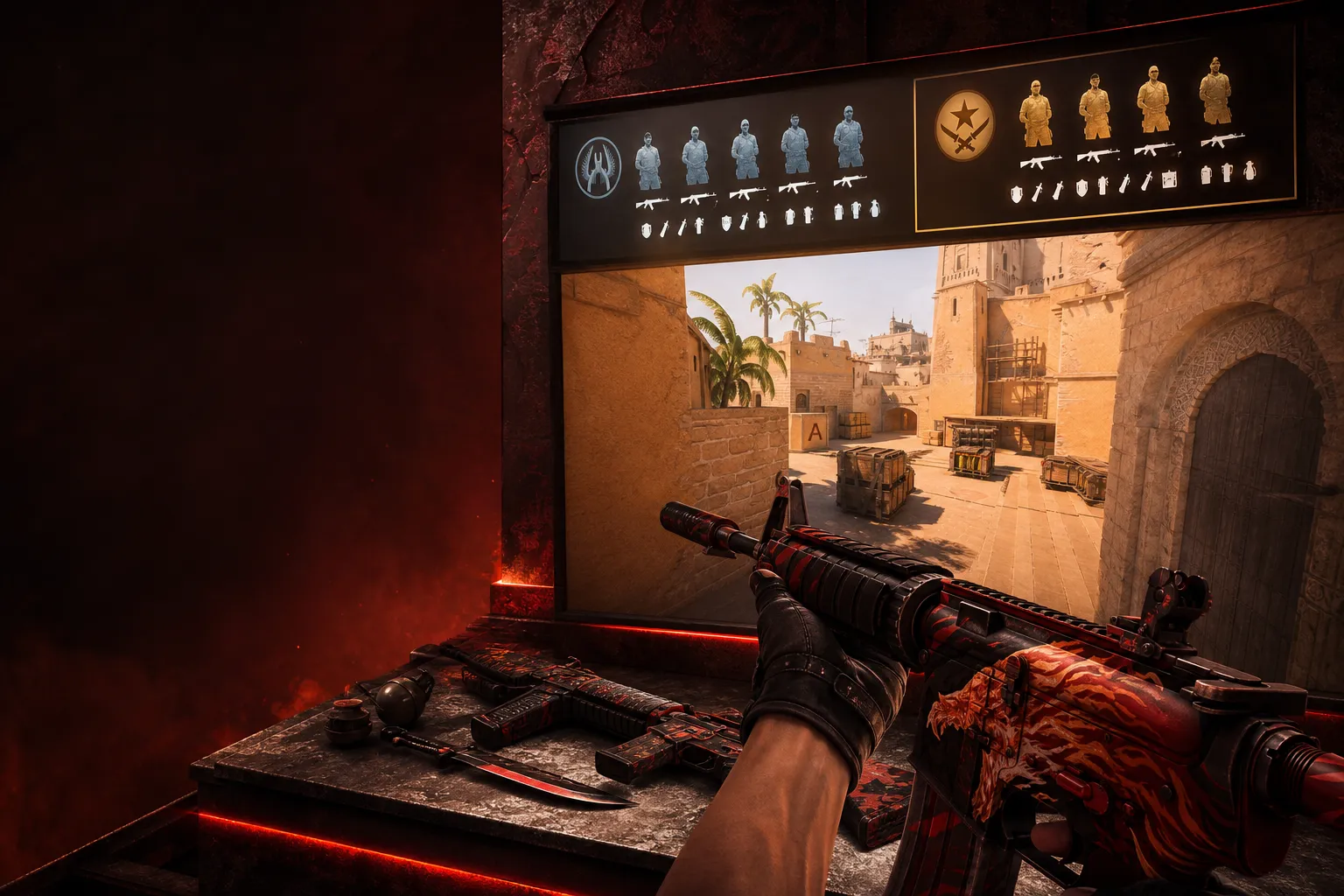
You know the round. Your team wins pistol, loses the anti-eco, then suddenly someone’s buying a full AK + utility in round 3 while the rest are on half armor and a dream. That’s how CS2 teams throw away matches before the rifles even start talking. The economy isn’t sexy, but if you’re losing gun rounds in Premier, on Faceit, or in a sweaty Mirage pug, this is probably where the damage starts.
CS2’s subtick stuff gets all the headlines, and yeah, the shooting feels cleaner than old 64-tick jail, but money still decides who gets to actually take fair fights. Win the economy, and you get full buys, double nades, and a real chance to play the round properly. Lose it, and you’re in that ugly zone where everyone has a different loadout and nobody can trade anything.
Stop thinking round-by-round and start thinking in blocks
The biggest mistake I see in mid-ranked CS Rating games is people treating every round like it lives alone. It doesn’t. A single buy decision affects the next two or three rounds, sometimes more. That’s why “we can force” is often just code for “we want to feel busy.”
CS2 economy is built around the same basic logic as CS:GO, but players still mess it up because they don’t track the money after the round ends. If you’re on CT side and lose two in a row on Inferno A site, for example, you don’t just ask, “Can I buy this round?” You ask, “Can I buy this round and still have a real buy next round if we lose?” That one question fixes half the bad eco calls in the game.
The magic number is usually $3400-ish, not vibes
Here’s the simple rule: if buying this round leaves you broke next round, it’s probably not a real buy. That’s especially true on CT, where losing a rifle and utility setup hurts more because you’re forced to retake with less information and fewer nades. A lot of players need to respect the fact that a rifle round without smoke, flash, and kit support is basically a half-buy with better branding.
For T side, the standard rifle buy usually looks like this:
- AK-47: $2,700
- Helmet and armor: $1,000
- Smoke, flash, molotov: $1,050 if you’re getting real utility
- Total: about $4,750 before mistakes
If your team has $4,200 each and one guy is insisting on a Desert Eagle like he’s s1mple in a highlight reel, that’s not a buy. That’s a donation.
The pistol round matters less than people think, but the follow-up matters a ton
Everybody obsesses over pistol because it’s the first round and it feels important. Sure. Win it and life gets easier. Lose it and you’re fighting uphill. But the real economy swing happens in rounds 2 through 4, where most teams either stabilize or spiral into garbage buys that never stop.
If you win pistol on T side, don’t overthink it: buy armor, keep a couple of smokes, and run the anti-eco properly. If you lose pistol, the classic mistake is buying one deagle, two smokes, and three sets of utility like the team is trying to cosplay as Team Vitality on a bad day. Just save or force together. Half-assing it is the worst option because you neither save enough for a clean rifle round nor pressure the CT economy enough to matter.
On CT side, winning pistol usually gives you a strong shot at 3-0 or 4-0 if you don’t get greedy. That’s where teams like Vitality or G2 are so clean: they don’t give the other side free life. The round ends, and they immediately make the economy ugly for the other team. No freebies. No hero purchases.
Force buys are not the same as good force buys
There’s a difference between a calculated force and a brainless one. A good force buy has a reason. Maybe you’re on round 2 after losing pistol and the other team is weak to stacked pistols. Maybe you’re down 7-4 on Ancient and you need to break the enemy’s money before halftime. Maybe you’ve got one saved rifle and enough cash for pistols around it. That’s a plan.
A bad force buy is what happens when everyone buys different trash and hopes someone gets a multi-kill. That’s not economy. That’s gambling with extra steps.
When you force, at least make it coherent. Buy around the players who can actually create space. On T side, that might mean one guy gets a Galil, another gets a MAC-10, and everyone else dumps utility into the hit. On CT side, it often means stacked SMGs, a couple of upgraded pistols, and a very specific idea of where you’ll fight. Nuke lower ramp, Mirage connector, Inferno banana — pick one area and make the enemy feel the buy difference.
Use your SMGs like a tax on bad opponents
The MAC-10 and MP9 are disgusting when used correctly. That’s not a meme. They’re cheap, they’re fast, and if you’re stacking close angles on Overpass B or Anubis canal, they can print money. The whole point is to take a small investment and turn it into a better next buy. If you get a couple of kills and survive, your economy starts snowballing while the other side gets stuck on 2,900 cash and a couple of rifles they can’t support.
Pros do this all the time, even in Major pressure games. Watch donk on Spirit and you’ll see a player who understands when to convert a weak weapon round into future map control. He doesn’t force random ego fights; he uses tempo. That’s the part most pugs miss.
CT money is fragile, so stop dying after the round is basically won
This one drives me nuts. CTs win the site, then one guy peeks alone, dies to a saved AK, and suddenly the whole defense is awkward next round. You didn’t just lose one weapon. You lost the chance to stack economy, maybe a kit, maybe a flash, and now the loss bonus math gets messy.
In Source 2 CS2, the gunplay feels sharp enough that people get tempted into “one more peek” syndrome. Don’t. If you’ve got the round won, play the numbers. Keep rifles alive, keep kits alive, and make the T side work for exits. On maps like Dust2 or Mirage, one preserved rifle can be the difference between a full AWP buy and a double-SMG scramble next round.
Speaking of AWP buys, don’t be that guy who hard-forces the AWP every time he can almost afford it. AWP is $4,750, and if that buy leaves your team with no flashes and no kit, you’ve just made the round easier for the other side. ZywOo can get away with some of this because he’s ZywOo. You and your Premier stack? Probably not.
If you want more gun rounds, keep your team on the same plan
The cleanest economy teams aren’t always the flashiest. They just know when to save, when to half-buy, and when to stop trying to be the hero. That alone wins you rounds. The weird part is that it often looks boring from the outside, but boring CS is usually winning CS.
- Call the buy before the round starts.
- Don’t split the team into five personal economies.
- Use saved guns to set up the next round, not to chase stats.
- If two players can full buy and three can’t, decide together — not in silence.
Premier rating doesn’t care if you bought a Deagle because you felt confident. It cares whether your team had enough money to hold two sites, retake properly, and survive the next swing round. That’s why the best teams, from old Astralis defaults to modern Major contenders, obsess over utility and survivability. They’re not just buying weapons. They’re buying control of the next 90 seconds.
So next time your team starts arguing over a force on 4,000 cash, ask the only question that matters: are we trying to win this round, or are we trying to make the next three rounds impossible?